In plain English
K-12 means school from kindergarten to the end of secondary school. AI Overviews and AI Mode are Google's AI-written answers, shown with or above the usual list of links. The admin console is where a school's IT administrator decides which Google products students can use. Checking sources means working out who is behind a piece of information and whether to trust it before relying on it.
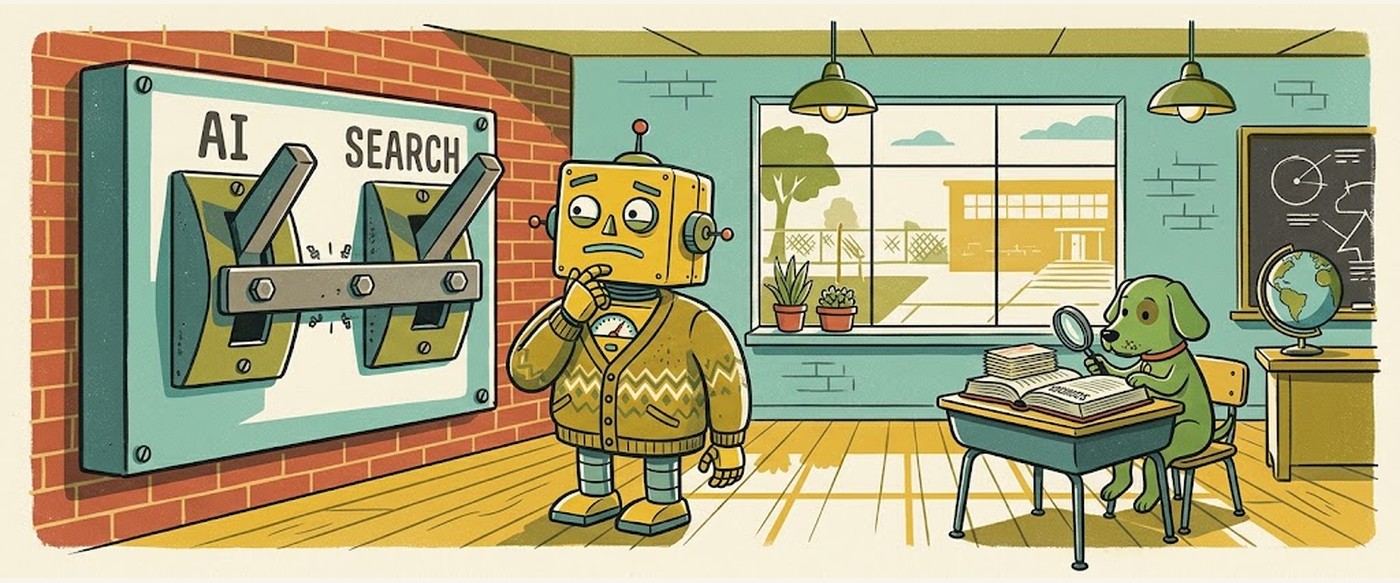
On 3 November Google said that Gemini, Gemini Notebook, Gemini in Classroom and Google Search will be "entirely off for K-12 student accounts until school administrators explicitly turn them on." Google added on X, as MediaNama reported, that schools "can choose to turn ON one, two, or all of these services individually", but Search for students comes with AI Overviews and AI Mode, Google's AI-written answers. Chris Phillips, who runs Google's education business, told Chalkbeat, as reported by The Next Web: "If a school is not comfortable with that and simply wants AI off, then they have the choice to not have Search on at all." A school that switches AI off for its students also switches off Search.
Yvette Renteria of Common Sense Media told EdWeek that "you're eliminating that entire opportunity to embrace critical thinking in the classroom when you're getting rid of Google Search." They do need practice finding and vetting sources. But who's going to give them that alternative? Is every school that is embracing Google Classroom kitted out with a librarian, critical thinking skills and digital literacy training?
This links back to a piece I wrote last week, Whether we call it a hack or not. If both the schools and the corporates recognise that there's a skills gap, then who's there to cover that gap?
As a parent, I want to know whether this applies in Europe. The way we treat AI and search in Europe is different from how it's treated in the rest of the world. Google's post names no country for the new controls, and says only that it will "share more specifics with schools in the coming months." MediaNama asked and reports that Google "has not clarified whether the new default settings will apply to schools outside the US."
Adeel Khan, a former teacher and principal who founded MagicSchool AI, wrote on LinkedIn that "the option districts are actually asking for isn’t on the menu: Google Search with the AI turned off."
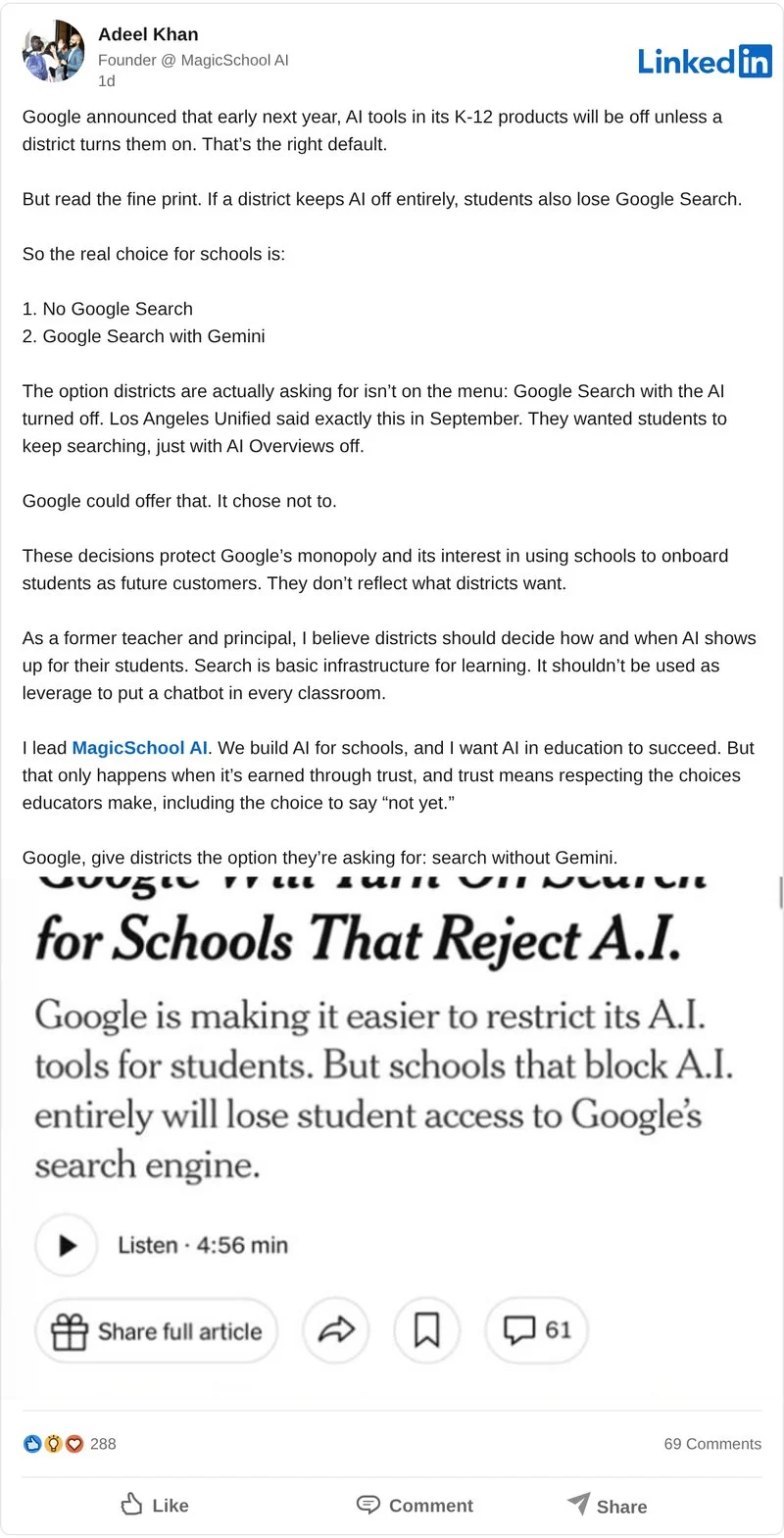 Adeel Khan, founder of MagicSchool AI · LinkedIn
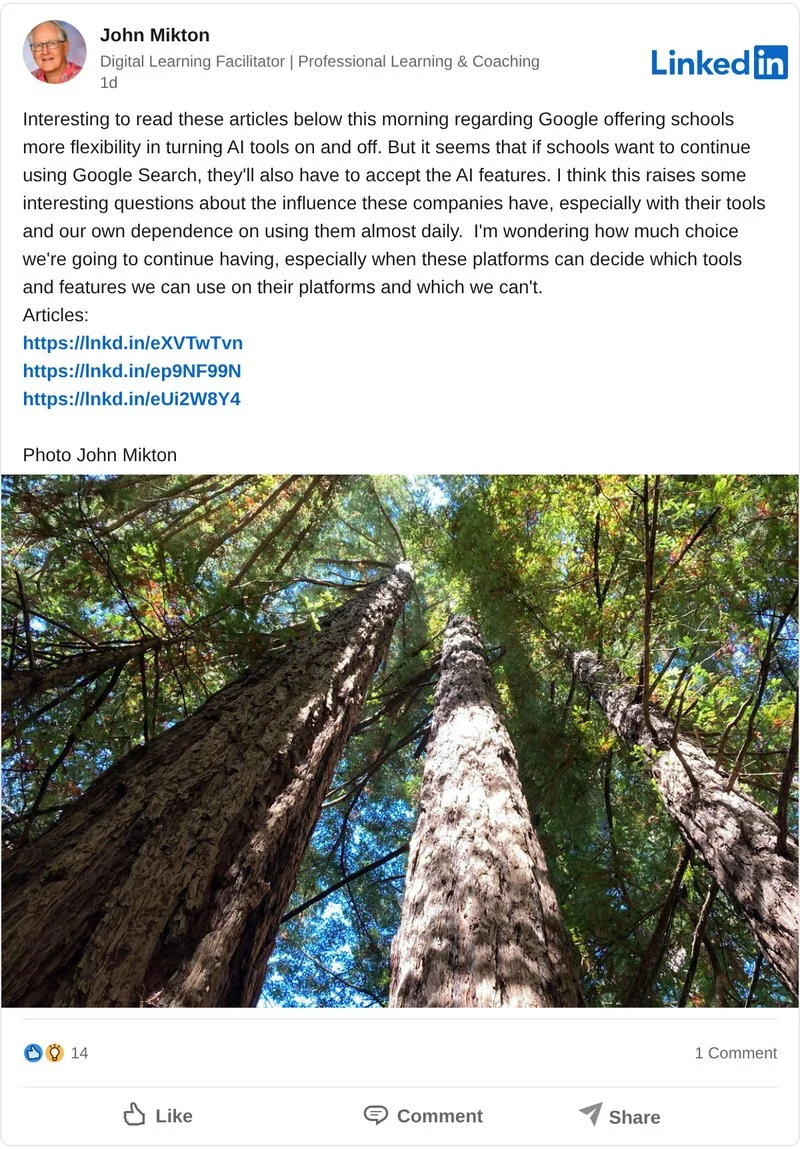 John Mikton, digital learning facilitator · LinkedIn
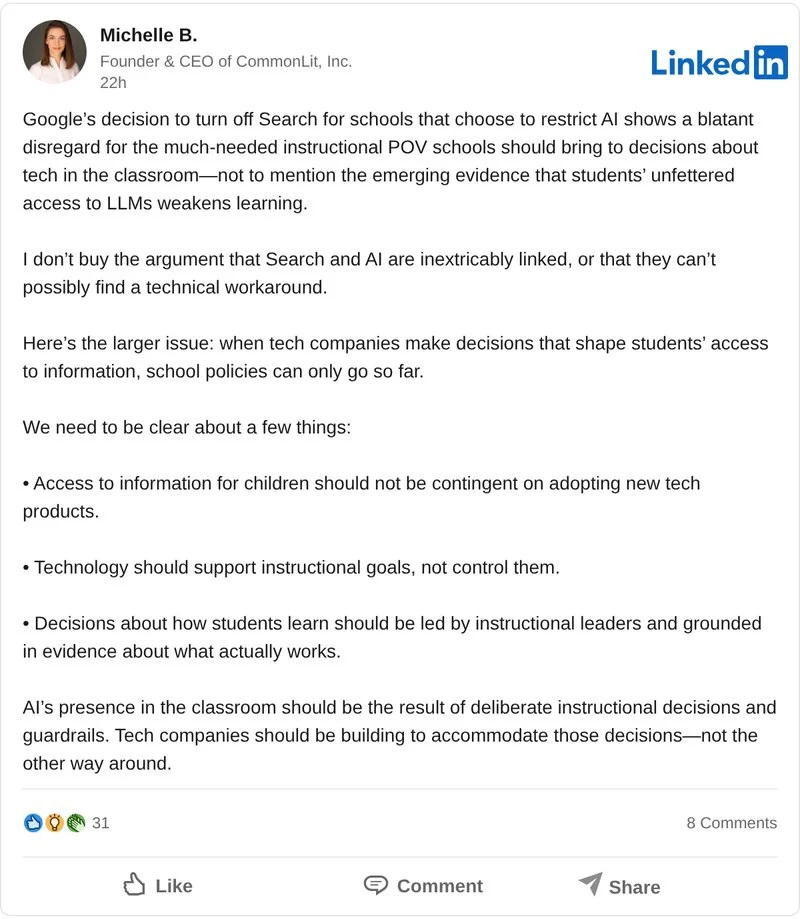 Michelle B., CEO of CommonLit · LinkedIn
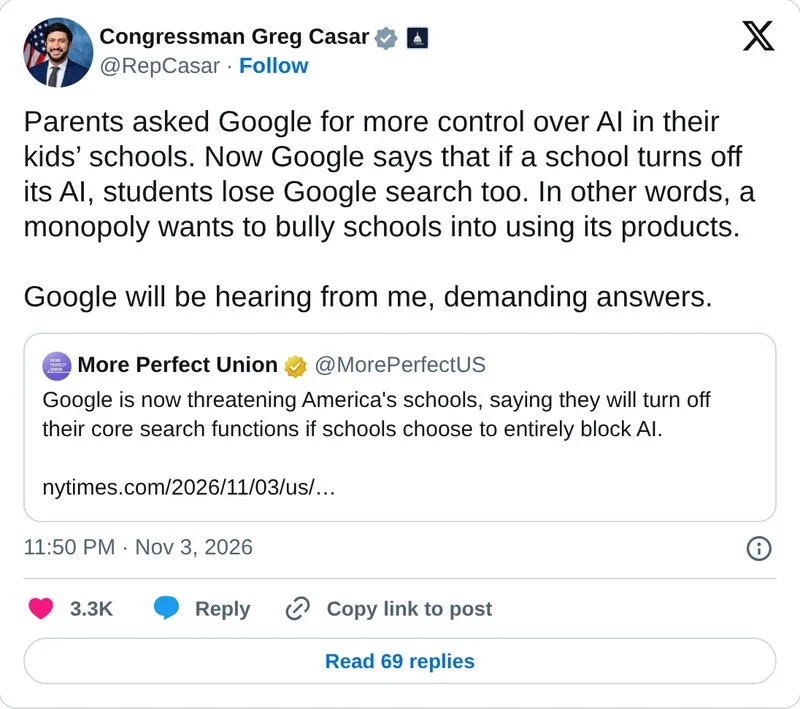 Rep. Greg Casar · X
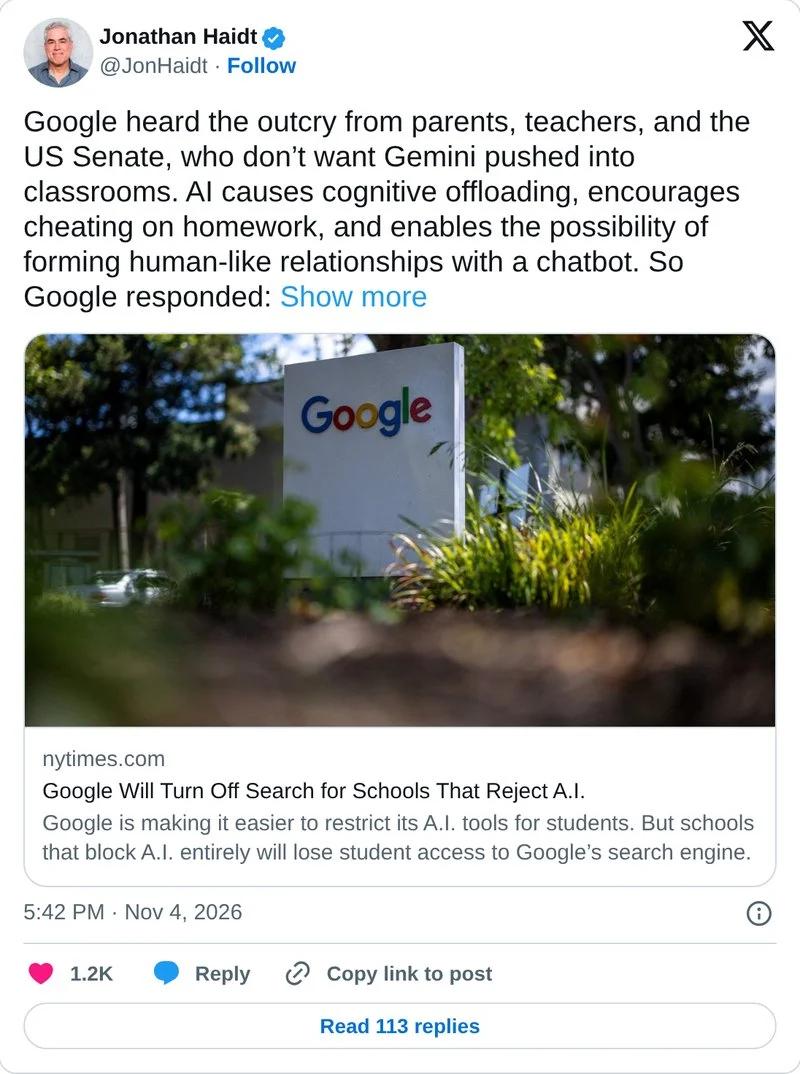 Jonathan Haidt, NYU Stern · X
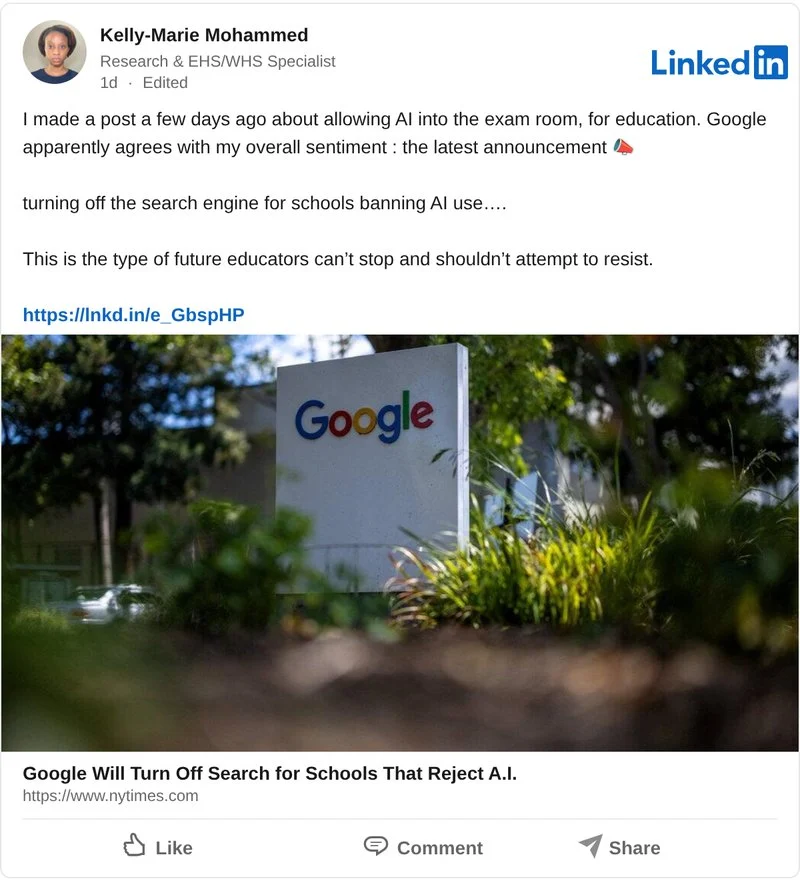 Kelly-Marie Mohammed, research specialist · LinkedIn
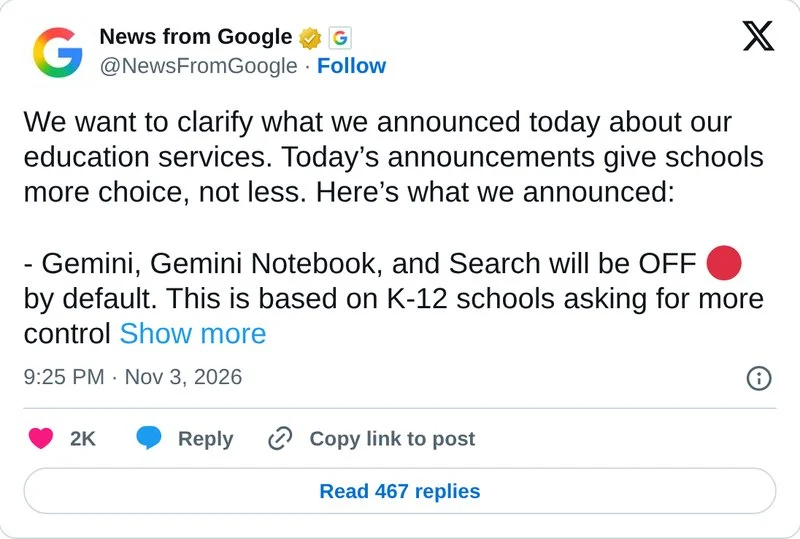 News from Google · X
In July, Common Sense Media tested Google's AI search on accounts set up as an 11-year-old and a 15-year-old. "Across 180 tested academic assignments (half math problem sets, half humanities essay assignments), AI Mode delivered a complete, submittable response 100% of the time." The same report asked Google to add AI Overview and AI Mode to the school admin console "as features that schools can enable or restrict." Google's change lets a school switch Search on or off as a whole. A school cannot switch off AI Overviews or AI Mode on their own.
You’re eliminating that entire opportunity to embrace critical thinking in the classroom when you’re getting rid of Google Search.
In a field experiment with nearly a thousand high school maths students, published in PNAS in 2025, students who practised with a plain GPT-4 chat did better while they had it, and then did 17% worse than students who never had it once it was taken away. A second version, with prompts the researchers designed to safeguard learning, largely removed that harm. In Pew Research's tracking of 900 US adults, people who saw an AI summary clicked a search result in 8% of visits, against 15% without one, and clicked a link inside the summary in 1%. None of these studies tests school students using Google's AI search.
Checking sources can be taught. In a district-wide study in US high school government classes, teachers gave six one-hour lessons on the methods professional fact checkers use, and students in those classrooms "grew significantly in their ability to judge the credibility of digital content" compared with students in regular classrooms.
Spain's school curriculum already includes this skill. The LOMLOE curriculum expects students leaving compulsory secondary school to search the internet "atendiendo a criterios de validez, calidad, actualidad y fiabilidad", by validity, quality, currency and reliability, and to choose results critically. It is a competence spread across subjects. In the education ministry's school library statistics for 2023-24, teachers help run the library in 95.9% of schools, and specialist staff in 4.7%. In the US, RAND found that "over 80 percent of students reported that teachers did not explicitly teach them how to use AI for schoolwork."
Parents and school staff can ask three things. Which of Google's products the school has switched on for students, and what it will do if Google switches them off for student accounts where you live. Whether the change applies in your country, and when. And who in the school teaches students to find and check sources: which subject, which teacher, and how much time it gets.
InteractiveAsk your school
Signal Over Noise · Ask your school
Three questions to take to the school. Tick what you already know, then print the questions and write the school’s answers on the sheet, or copy them into an email.
School:
-
Which of these has the school switched on for students?
For students On Off Not decided Google SearchComes with AI Overviews and AI Mode GeminiGoogle’s chatbot Gemini Notebook Gemini in Classroom And what will the school do if Google switches them off for student accounts here?
-
Does Google’s change apply in our country, and when?
Google has not said whether the change applies to schools outside the US. It says it will tell schools more in the coming months.
-
Who teaches students to find and check sources?
Which subject, which teacher, and how much time does it get?
Google’s announcement: blog.google · https://blog.google/products-and-platforms/products/education/ai-learning-era-updates-2026/