
TL;DR
- Apple’s Watch Series 12 and Ultra 4 add Audio Intelligence: Siri Recap, which summarizes your conversations across the whole day, and Live Rewind, which replays the last 15 seconds as text.
- Apple’s own privacy paper documents real engineering — audio is processed in hardware nobody, not even Apple, can access, and no recording is ever created.
- Legal experts surveyed by Bloomberg/the LA Times, across several all-party-consent states, say that architecture doesn’t resolve whether continuously processing someone’s speech still counts as an interception under wiretapping law.
- Live Rewind shows a visible signal when triggered. Siri Recap, which runs all day, shows no equivalent signal — and bystanders have no way to consent or decline either feature.
In plain English
Apple’s new Watch features listen for conversations so they can summarize your day or let you replay the last 15 seconds as text. The engineering is genuinely strong: the raw audio never turns into a file that anyone, including Apple, can get at. But that answers a different question than the one a bystander actually has, which is whether they can say no to being processed at all. Right now they can’t — there’s no indicator for the feature that runs all day, no prompt, and no control that belongs to anyone but the person wearing the watch.
Apple announced Audio Intelligence for the Apple Watch Series 12 and Ultra 4 this month, and shipped an unusually detailed eleven-page privacy paper alongside it. The engineering is real. The question it doesn’t answer is also real, and it isn’t the one Apple wrote the paper to address.
Audio Intelligence is four features. Siri Recap builds a running summary of your conversations across the day, so you can catch up later. Live Rewind, triggered by a double-press of the Digital Crown, shows the previous 15 seconds of a conversation as text. Music Recognition, via Shazam, identifies what’s playing nearby. Sound Recognition flags sirens, alarms, and doorbells for people who are deaf or hard of hearing. The first two are the ones that listen to conversations, and the privacy paper is mostly about them.
What Apple built
Audio enters a Secure Exclave (a hardware-isolated compartment in the Watch’s new S11 chip), where a lightweight model first checks only whether speech is happening, without transcribing or storing anything. If a conversation is detected, audio moves into a protected buffer that Apple’s paper says is “inaccessible to the user, the operating system, apps, and even Apple.” For Siri Recap, that audio is encrypted and sent to a matching Secure Exclave on the paired iPhone, where it’s transcribed on-device and condensed by an on-device model into something under half the length of the original. Apple’s specific claim: “the raw audio is immediately and permanently deleted and no longer exists on either Secure Exclave.” Only the condensed text goes on to Private Cloud Compute for final summarization, and Apple states plainly that no audio recording is ever created that “can be accessed by the operating system, apps, the user, or Apple.” That architecture answers one question directly: can anyone — Apple, an attacker, a subpoena — get the audio? By design, no. There’s nothing to get.
That’s also all the paper proves.
Siri Recap gives bystanders no consent mechanism
Reporting from Bloomberg, syndicated by the Los Angeles Times, surveyed attorneys in California, Massachusetts, Pennsylvania, and Washington — states with laws generally requiring the consent of everyone in a conversation before it can be intercepted or recorded. About half a dozen more states, including Illinois and Florida, have similar all-party consent rules. None of the lawyers were reassured by Apple’s architecture. The legal question is whether continuously processing someone’s speech into text, without creating a conventional audio file, still counts as an interception. Subodh Chandra, of Chandra Law Firm, said the feature set “raises serious concerns under California law and the laws of other states that require all-party consent.” Mark Blair, of Seattle firm Blair Kim Moeller, put it more bluntly: “If the recording was made without consent, the wearer of the Apple Watch could be charged with a crime,” regardless of whether the content is later deleted. “You have to announce, ‘I have an Apple Watch — this Apple Watch is recording,’” he said. “Absent that, it is a criminal violation.”
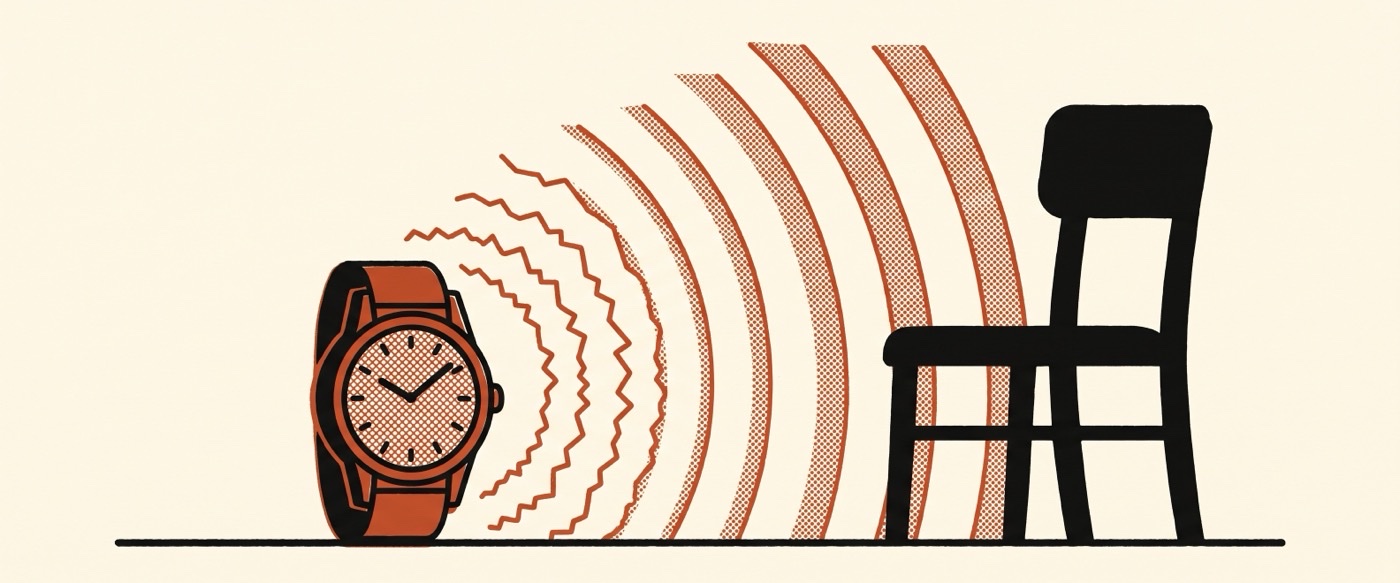
Apple’s position, per its statement to Bloomberg, is that nothing is recorded in the first place, so there’s nothing to consent to — the same distinction the privacy paper is built around. But the paper’s own detail undercuts the strongest version of that argument. According to the Los Angeles Times report, a full-screen animation and microphone indicator appear on the watch display when Live Rewind is activated — but “no comparable indicator appears continuously while Siri Recap is operating throughout the day.” Live Rewind shows a visible signal when someone triggers it. Siri Recap runs all day and shows no equivalent signal at any point. It’s a design choice Apple made and documented, and it’s the one a bystander would actually need to notice.
Adam Schwartz, privacy litigation director at the Electronic Frontier Foundation, said plainly that people have no way to consent or decline: “People don’t really have a practical means to consent or decline recording. We suggest people should think twice before using this technology, out of respect to the conversational privacy of others.” Apple’s own user guidance mentions the same idea but doesn’t give bystanders a way to act on it — it tells wearers to “consider” the people around them “where conversations might be private or sensitive.” That’s guidance aimed at the wearer. The person standing next to them has no control to use. Nothing in the privacy paper’s Secure Exclave chain, none of the encryption, none of the on-device processing, changes who gets to decide whether the conversation is being captured. That decision sits entirely with the person wearing the watch.
Security and consent are separate guarantees
None of this means Apple’s engineering claims are false. The Secure Exclave design is a real, verifiable improvement over sending raw audio to a server. But “no one can access this, not even Apple” is a claim about security. It says nothing about consent — a separate guarantee entirely. Colin Zick, chair of the privacy and data security practice at Foley Hoag, put the general pattern this way: “we see a lot of circumstances where the technology is getting ahead of the law.” His recommendation: “My advice would be, treat this as if it was going to be treated like an interception under the wiretapping statute, and therefore, ask permission.”
Apple can probably be trusted with the data, on this evidence. What its privacy paper doesn’t settle is whether the people around you know Siri Recap is running, and whether you tell them.