
Ask Your AI To Ask You Questions (Free)
Ask your AI to ask you questions
Last Saturday morning I sat down to write the weekly digest for my build-log site — seven posts from the week to thread into a single email. I did what I’d been doing for months: described the week to Claude, asked for a draft, waited.
It came back voice-aligned. The phrasing read like me but it just wasn’t hitting the mark. It was too technical, and not personal enough. I hadn’t dug into what the actual details were or what mattered to me about each post, and the draft didn’t either. The voice was fine; the source material underneath it was thin.
So I did the opposite of what I’d been doing. I asked Claude for questions instead of a draft — one or two per post, the kind where answering would tell you why I’d built the thing rather than what it did. Then I turned voice mode on and rambled.
Typing is too mechanical - for me
Typing out why I built something kills the thinking. The reasons are in my head somewhere, but pressing them into sentences with my fingers is slow enough that by sentence three I’ve forgotten what made sentence one feel right.
Talking doesn’t work like that. You can wander, double back, follow a tangent for thirty seconds and drop it. You can answer a question by accidentally answering a different one. It’s conversational — the way I actually think about my own work when nobody’s asking me to write it down.
A few things have made this newly viable. Context windows on Claude and the other frontier models are large enough that a long rambling answer doesn’t get lost halfway through. Whisper-class transcription is built into the assistants themselves and into the OS — Whisper Flow, native dictation, whichever you use, you don’t have to think about capturing your words. And the model has been working alongside you long enough by now to know your voice, your projects, your shorthand. Dumping thinking in and having it interpreted isn’t as strange as it was a year ago.
Thirty minutes of voice answers gave me more usable material than ninety minutes of solo drafting had.
What’s in the full issue

The paid edition picks up from here. It separates this move from the two things it looks like but isn’t — dictation and prompting — and walks through the counter-intuitive rule I walked straight past the first time I tried it. There’s a short end-of-piece exercise you can run tonight on something you already owe yourself a piece of writing about.
Paid subscribers also get the prompt library that goes with it — eight paste-ready interview-first templates covering newsletters, proposals, talks, retrospectives, difficult emails, client briefs, rabbit-hole posts, and decision memos. Each one runs the same four-step ritual: paste, voice-mode ramble, ask the model to reflect the structure back, then draft.
€7.00 / month
Signal Over Noise
Skip the AI Hype.
A newsletter about using AI to actually run a business and build things — past the hype and the doom,… Read more
Elsewhere
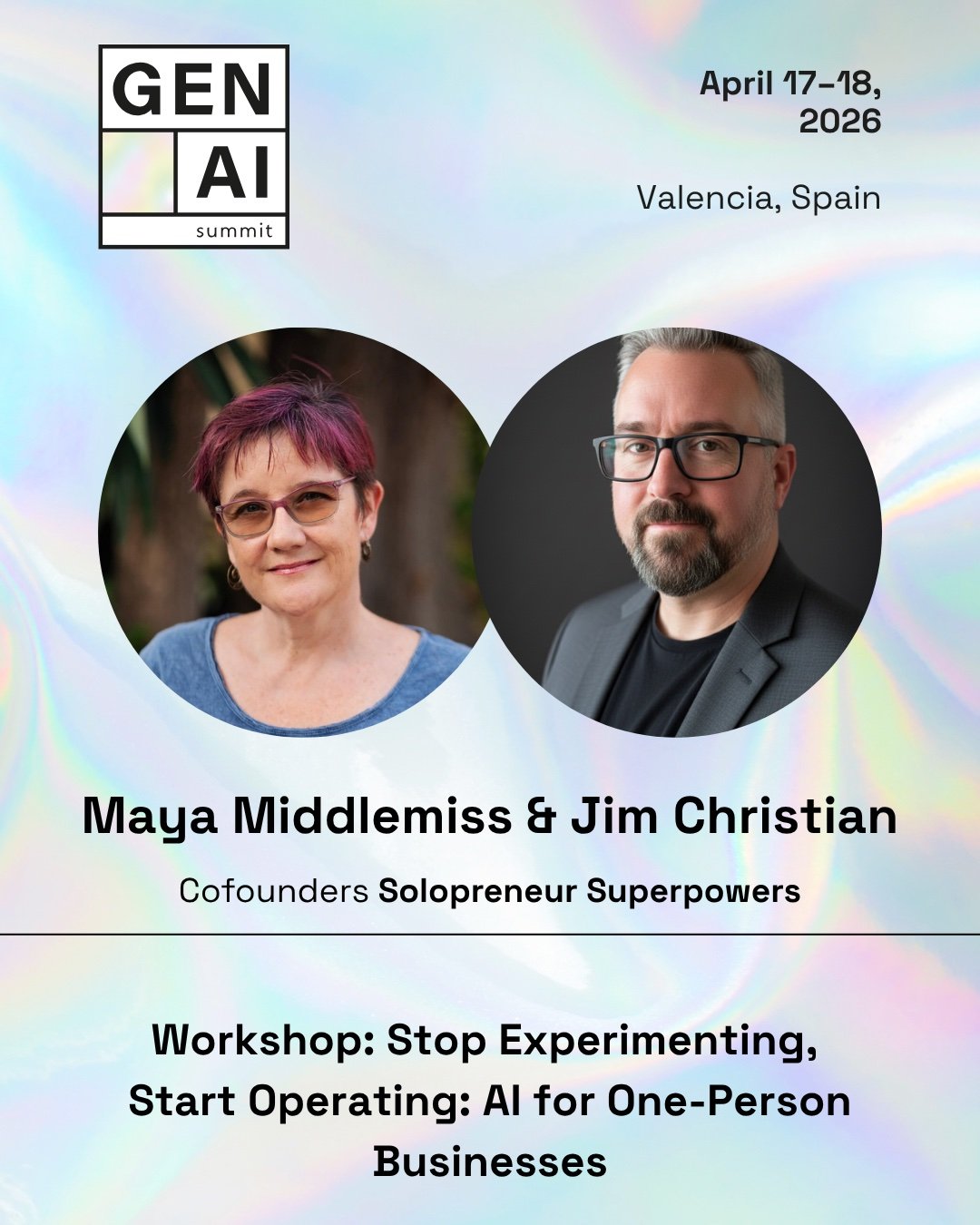
This Friday I’ll be at the GenAI Summit EU 2026 in Valencia, running a workshop with Maya Middlemiss called Stop Experimenting, Start Operating: AI for One-Person Businesses. It’s aimed at people who’ve been using AI tools for a while and want to move from tinkering to operating — specifically for solopreneurs, one-person businesses, and small teams where the person reading this is also the person doing the work.
If you’re in Valencia this week, come down to the marina and say hi. Tickets and details at genaisummit.eu.
Until next time,
Jim